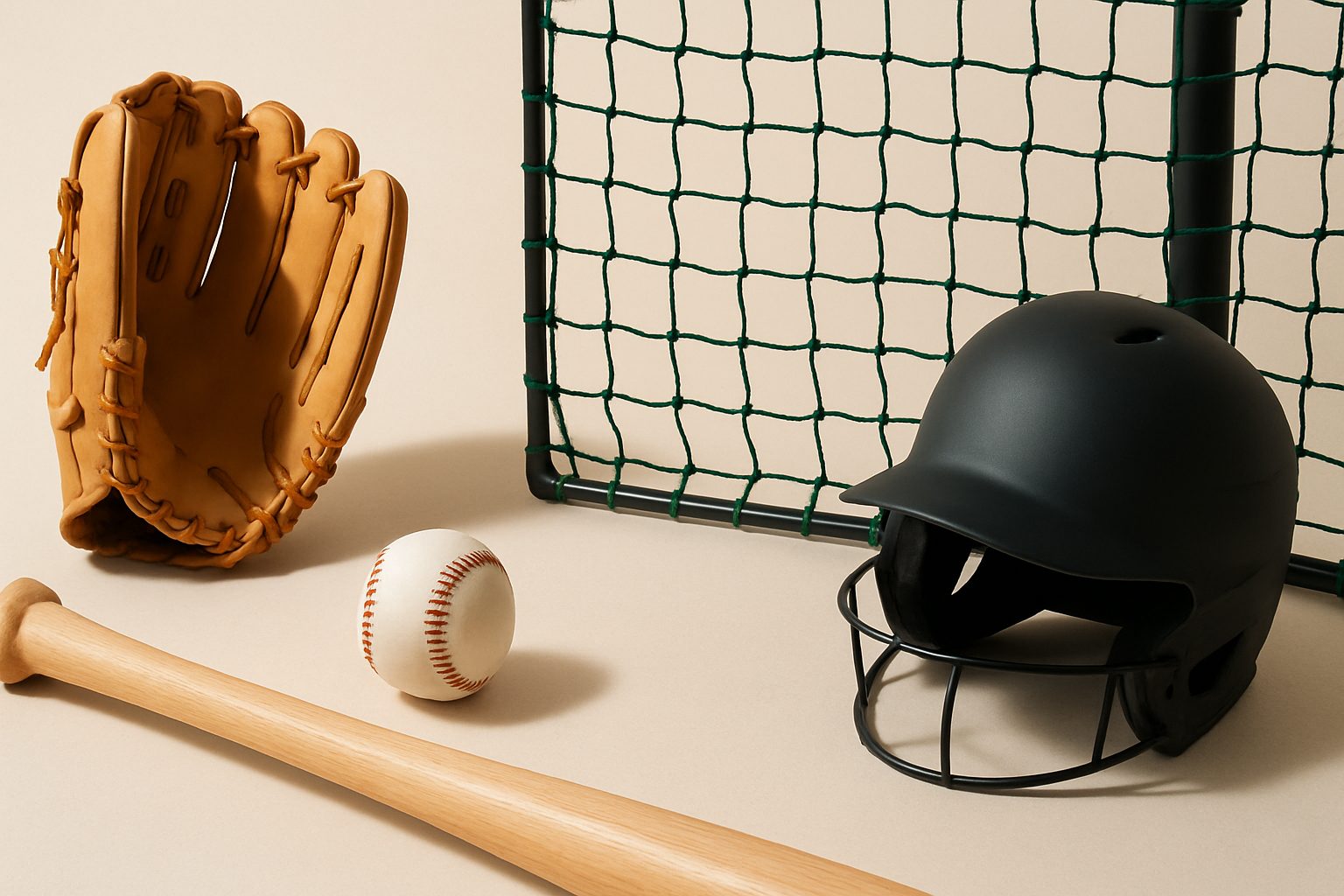
Batting Cage Net Materials Explained: Polyethylene, Nylon & Knotless Nets
If you're setting up a home batting cage, the net you choose matters far more than most people realise. It's the component that takes every ball, every swing, and determines how long your cage stays functional. But walk into a supplier's catalogue and you'll find three main options: polyethylene, nylon, and knotless nets—each with genuinely different characteristics that suit different setups and budgets.
Polyethylene: The Budget-Friendly Standard
Polyethylene nets are the most common choice for home cages, and that's mostly because they're affordable. They're made from plastic fibres woven into a simple knotted structure, and they'll catch everything from a tennis ball to a baseball without issues.
The real limitation is durability. Polyethylene degrades quickly under UV exposure—meaningful sun damage appears within 12 to 18 months of regular outdoor use in the UK. You'll notice the netting becoming brittle, then developing small tears that spread. Indoors, where UV isn't a factor, a polyethylene net lasts longer, but the material still weakens over time from repeated ball impact.
Ball-speed wise, standard polyethylene handles most recreational batting. A 60 mph pitch won't stress it; at 80 mph and beyond, you're asking the material to work harder, and micro-tears accumulate faster.
Pros: Inexpensive. Easy to install and replace. Adequate for casual practice.
Cons: Poor UV resistance. Brittles and tears within a few years outdoors. Lower impact tolerance at high ball speeds.
Nylon: The Durable Step Up
Nylon nets are tougher. They're woven with a similar knotted structure to polyethylene, but the material itself is more resilient to both UV and repeated impact. If you're planning to use your cage year-round or expect faster pitches, nylon moves the lifespan forward to around 3 to 5 years outdoors—roughly double what you'd get from polyethylene.
Nylon also handles higher ball speeds better. It flexes under impact rather than simply absorbing it, which distributes stress across more of the net and reduces localised wear. For anyone regularly throwing or pitching above 70 mph, nylon is noticeably more forgiving.
The tradeoff is cost. You'll pay around 40 to 60 percent more for a nylon net than polyethylene. There's also a slight practical difference: nylon can absorb moisture and may dry more slowly after rain, though this isn't usually an issue in the UK climate.
Pros: Significantly better UV resistance. Higher impact tolerance. Longer lifespan (3-5 years outdoors).
Cons: More expensive upfront. Slightly slower to dry if wet.
Knotless Nets: The Premium Option
Knotless netting uses a different manufacturing process entirely. Instead of weaving individual fibres and tying knots, the net is made from continuous strands that interlock without knots. This removes stress points—knots are traditionally where nets fail first.
A knotless net typically lasts 5 to 7 years outdoors, even under regular UV exposure. They handle high-speed impacts remarkably well because there's no weak point for stress to concentrate around. Some manufacturers claim knotless nets can safely handle ball speeds exceeding 90 mph without degradation.
The catch is price. You're looking at 2 to 3 times the cost of polyethylene, sometimes more. For a home cage, this is a genuine investment. That said, if you plan to keep the cage long-term, use it frequently, or pitch at genuinely fast speeds, the maths can work in knotless's favour—you're replacing the net far less often.
Knotless nets also tend to have smaller mesh sizes, which catches smaller balls (like softballs or training balls) more effectively, though this can slightly reduce visibility through the net.
Pros: Exceptional durability (5-7 years). No weak points at knots. Excellent UV resistance. Superior high-speed performance.
Cons: Significantly more expensive. Smaller mesh may catch more breeze and reduce visibility slightly.
What Suits a UK Home Setup?
For most UK home batters who practise casually a few times weekly and don't throw above 75 mph, nylon is the sweet spot. It's materially more durable than polyethylene, lasts a reasonable time outdoors, and costs less than knotless without requiring replacement every other year.
If your cage is indoors or under a structure that limits sun exposure, polyethylene is fine—cost-effective and perfectly adequate.
Consider knotless if you're serious about the investment: coaching others, regular high-speed work, or long-term outdoor placement. The extended lifespan and superior impact tolerance justify the expense for heavy use.
Maintenance Extends Net Life
Regardless of material, a few basics matter. Keep the netting clean—dirt and algae trap moisture and accelerate UV damage. Inspect regularly for small tears and repair them promptly; small tears spread exponentially once they start. And if your cage is outdoors, cover or take down the netting during winter if possible—off-season storage adds years to net life.
The net you choose isn't just about initial cost. Think about how often you'll use the cage, what speeds you'll throw, and whether you're willing to replace it in 18 months or would rather invest once and forget about it for five years. That clarity makes the choice straightforward.
More options
- Portable Batting Cage Frames (Amazon UK)
- Cricket Practice Batting Nets (Amazon UK)
- Heavy-Duty Replacement Batting Cage Nets (Amazon UK)
- Batting Tees (Amazon UK)
- Pitching & Bowling Machines (Amazon UK)