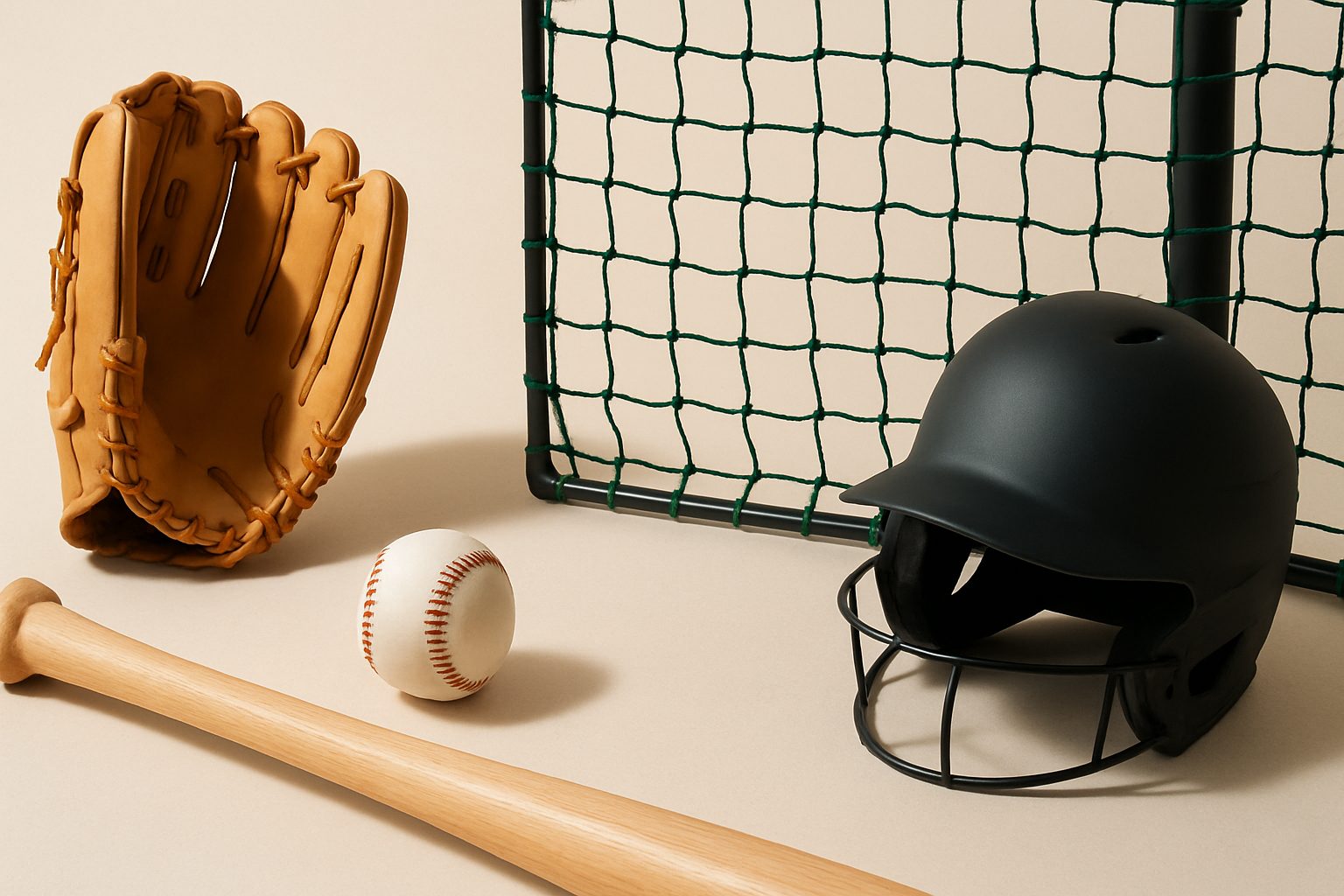
Best Batting Cage Net Replacements & Spares UK 2025
Batting cage nets wear out. Heavy use, UV exposure, and impact from balls gradually breaks down the twine, and you'll eventually face a choice: replace just the net or buy a new cage. If your frame is sound, swapping the net alone usually makes financial sense.
When to replace your net
You're looking at replacement when:
- The twine has become brittle and snaps easily under ball impact
- Holes appear across multiple areas, not just one patch
- The mesh has discoloured severely and lost elasticity
- Knots are unravelling in clusters
A net that catches occasional tears can be spot-repaired with netting twine and a needle. But once degradation is widespread, patching becomes a temporary band-aid. Most nets last 2–4 years with regular use in a domestic setting, longer if usage is light.
Knowing your cage size
Replacement nets come to fit standard cage dimensions. The most common are:
- 10ft × 10ft × 12ft — the UK standard for compact home setups and many cricket academies
- 12ft × 14ft × 14ft — semi-professional training spaces, slightly larger footprint
- 10ft × 20ft or longer — tunnel-style cages for extended batting lanes
Before ordering, check your frame measurements. Width × depth × height. If your original cage came with documentation, that's your starting point. Otherwise, measure the frame opening and vertical clearance. Manufacturers list net sizes by these dimensions; mismatch and you'll either have excessive slack or struggle getting the net attached.
Twine gauge and durability
Net quality comes down to twine thickness, measured in millimetres. Thicker twine absorbs impact better and resists abrasion:
- 2mm twine — light residential use, practice nets where ball speed is moderate. Budget option but wears quickly under heavy impact.
- 3mm twine — the practical middle ground. Handles regular training, moderate intensity. Good balance of durability and cost.
- 4mm+ twine — commercial facilities, high-impact environments. Lasts significantly longer but costs noticeably more. Overkill for casual home use.
For a home cage in regular use—say 10–15 hours per week—3mm twine is worth the extra cost. It'll outlast 2mm by a year or more, and the replacement cost difference isn't dramatic.
UK retailers and available brands
Most sports equipment suppliers stock basic cage nets, but specialist retailers often offer better choice and custom sizing:
Sports netting specialists typically stock nets for cricket, baseball, and golf cages. They can often make custom nets if your cage is non-standard. Expect to find brands like Fortress, Kenko, and own-brand options at competitive prices.
Major sports retailers—Decathlon, Sports Direct, and independent cricket shops—carry standard sizes for popular cage models. Stock varies; speciality retailers tend to have deeper ranges.
Online marketplace sellers on Amazon and eBay offer nets at varied price points. Read reviews carefully; cheaper options often use thinner twine and don't last as long.
For genuine custom work—unusual dimensions or premium twine grades—reach out directly to netting suppliers. Many will fabricate to spec and quote within 5 working days.
Cost comparison: net replacement vs new cage
A replacement net for a standard 10ft × 10ft × 12ft cage costs £120–£300, depending on twine gauge and material. Premium options (4mm+ twine, UV-resistant coating) reach £400.
A new complete cage—frame and net—starts around £600 for entry-level setups and easily exceeds £1,500 for semi-professional equipment.
The math is simple: if your frame is intact and properly installed, replacing just the net saves 60–80% of new-cage cost. The frame itself is engineered to last 10+ years with normal maintenance. You're essentially paying for the wearing part.
Where it changes: if your frame is corroded (steel without proper coating), dented significantly, or the joints are loose, a frame-only replacement or full new cage becomes more sensible than an expensive net on a failing support.
Installation and order timing
Nets arrive in bags, usually rolled. Installation is a two-person job if you're familiar with your cage; first-time setup takes 1–2 hours. You'll need:
- New net and any tie-off rope or netting twine
- A step ladder or access to the frame height
- Something to cut twine (utility knife)
- Patience with knots
Most suppliers include basic fitting instructions. If your cage uses a rope-and-loop system (common for home setups), that's straightforward. Cages with permanent frame attachment points take longer but are more secure.
Order timing matters. Delivery is typically 7–10 days. If your net is near failure, order early—you don't want your cage unusable mid-season while you wait for replacement stock.
Getting value from a replacement net
Inspect your frame while the cage is open. Check for rust, loose bolts, and cable tension. A net replacement is the perfect moment to address frame maintenance; you'll have access that you won't get otherwise.
If you're refinishing or repainting the frame, do that during net replacement downtime. The cage sits idle anyway.
For most home users, replacing the net extends your cage's life cost-effectively. It's the sensible option when the frame is sound and you're getting regular use. Only abandon the cage if the structure itself is failing or your situation has changed entirely.
More options
- Portable Batting Cage Frames (Amazon UK)
- Cricket Practice Batting Nets (Amazon UK)
- Heavy-Duty Replacement Batting Cage Nets (Amazon UK)
- Batting Tees (Amazon UK)
- Pitching & Bowling Machines (Amazon UK)